

What Causes Connector Misalignment in a Connectors System?
Connector alignment plays an important role in the performance and reliability of a Connectors System. When two connector components do not align correctly during mating, the result can range from difficult insertion to increased contact resistance, damaged terminals, intermittent electrical signals, or premature component failure. In applications where connectors are repeatedly connected and disconnected, even a small alignment issue can become a significant operational problem.
A Connectors System generally includes mating connectors, terminals, housings, locking mechanisms, mounting structures, and sometimes cables or circuit boards. These components must work together within defined mechanical tolerances. Understanding what causes connector misalignment can help engineers identify problems during design, assembly, and maintenance while improving the overall reliability of an Electrical Connector System.
What Is Connector Misalignment?
Connector misalignment occurs when the mating parts of a connector are not positioned correctly relative to each other before or during connection. Ideally, connector pins, sockets, terminals, and housings should follow a controlled alignment path. If one component is shifted, tilted, rotated, or positioned outside its specified tolerance, the mating process may become difficult or incomplete.
In a typical Connector System, alignment is not limited to the connector itself. The position of the cable, PCB, mounting panel, enclosure, and mechanical support structure can also influence how accurately the connector components meet. This means that misalignment can originate from either the connector or the equipment in which it is installed.
What Causes Connector Misalignment in a Connectors System?
1. Manufacturing Tolerances
Manufacturing tolerances are one of the most common causes of connector misalignment. Every component has dimensional tolerances, including connector housings, terminals, mounting holes, pins, and sockets. If several components are assembled together and their tolerances accumulate in the same direction, the final position may deviate from the intended alignment.
A well-designed Connectors System accounts for these tolerance variations and provides sufficient alignment features to compensate for small dimensional differences.
2. Incorrect Connector Installation
Improper installation can also create alignment problems. A connector may be mounted at an incorrect angle, installed with insufficient support, or positioned incorrectly relative to the mating component. Excessive force during installation can further shift the housing or deform mounting structures.
In an Electrical Connection System, installation instructions should clearly define mounting positions, insertion directions, fastening requirements, and allowable alignment tolerances.
3. Mechanical Stress and Cable Movement
Cables connected to a connector can apply mechanical loads to the connector housing. Pulling, bending, twisting, or repeated movement may gradually change the connector's position. This is particularly important in industrial equipment, automotive systems, robotics, and other applications where cables are exposed to continuous movement.
Proper cable routing and strain relief can reduce the mechanical stress transferred to the connector and help maintain alignment over time.
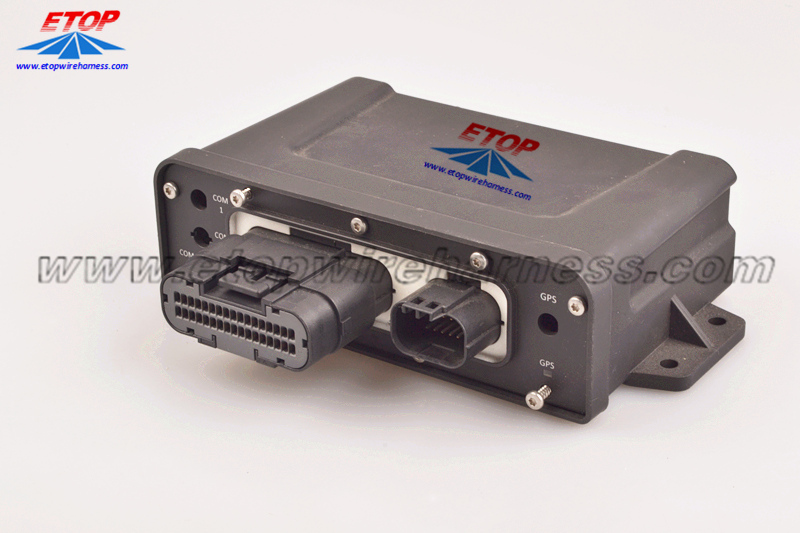
4. Poor Housing Design
Connector housings provide mechanical support and guide the mating components into position. If the housing does not provide sufficient guidance, the terminals may approach each other at an incorrect angle. Poorly positioned guide features can also make insertion more difficult.
A reliable Connector System typically incorporates features such as guide pins, alignment keys, locating surfaces, or keyed housings to ensure that mating components approach each other correctly.
5. Thermal Expansion
Temperature changes can affect connector alignment because different materials expand and contract at different rates. Metal terminals, plastic housings, circuit boards, and mounting structures may have different coefficients of thermal expansion.
In equipment operating across a wide temperature range, these dimensional changes can affect the relative position of connector components. For this reason, thermal conditions should be considered when designing an Electrical Connector System.
6. Vibration and Shock
Vibration and mechanical shock can gradually change the position of connector components. Continuous vibration may loosen mounting hardware or create movement between the connector and its supporting structure.
Applications such as vehicles, industrial machinery, and automated equipment may require connector housings and mounting systems designed to withstand repeated mechanical loads without losing alignment.
How Does Connector Misalignment Affect Electrical Performance?
Connector misalignment can prevent terminals from making full contact. When contact surfaces do not meet correctly, electrical resistance may increase and signal transmission can become unstable. In severe cases, terminals may bend, deform, or become damaged during insertion.
For high-speed or sensitive electronic applications, poor alignment can also contribute to signal integrity problems. Therefore, mechanical alignment is closely connected to the electrical performance of a Connectors System.
How Can Connector Misalignment Be Prevented?
Engineers can reduce alignment problems by using precision mounting features, appropriate mechanical tolerances, guide structures, keyed connectors, and effective strain relief. The connector should also be tested under the expected temperature, vibration, and mechanical conditions.
Proper assembly procedures are equally important. Operators should avoid forcing connectors together when the mating parts are not correctly positioned. If excessive insertion force is required, the alignment should be checked before continuing.
How Does Connector Sealing Work in a Connectors System?
Connector sealing is another important design feature in many Connectors Systems. Sealing helps prevent water, dust, oil, chemicals, and other contaminants from reaching electrical contacts or internal connector components. This is particularly important when an Electrical Connector System is used in outdoor equipment, vehicles, industrial machinery, or other environments where connectors may be exposed to moisture and contamination.
What Is Connector Sealing?
Connector sealing refers to the use of sealing components and structural features to limit the entry of external substances into the connector interface. Depending on the application, a sealing system may include rubber seals, gaskets, sealing plugs, protective boots, or specially designed connector housings.
The sealing structure is normally positioned around the mating interface, cable entry, or connection point. When the connector is assembled, the sealing component is compressed against the surrounding surfaces to create a barrier.
How Does a Sealing Element Work?
A common sealing element is an elastomeric gasket or seal. When the connector components are mated, the seal is compressed between two surfaces. This compression fills small gaps and creates a continuous barrier around the connection area.
The effectiveness of the seal depends on several factors, including material properties, compression level, surface condition, connector geometry, and environmental conditions. The seal must remain flexible enough to maintain contact while resisting deformation and degradation during service.
How Does Connector Sealing Protect Electrical Contacts?
Electrical contacts can be affected by moisture, dust, chemicals, and other contaminants. If these substances reach the contact interface, they may contribute to corrosion, contamination, or changes in electrical resistance.
A properly designed Connector System uses sealing structures to reduce the possibility of contaminants reaching sensitive electrical areas. This helps maintain consistent contact conditions and supports the long-term performance of the Electrical Connection System.
What Types of Sealing Are Used in Connector Systems?
Different applications require different sealing approaches. Cable-entry seals are commonly used where wires enter the connector housing, while interface seals protect the mating area between connector components. Panel-mounted connectors may also use gaskets between the connector body and equipment enclosure.
Some Connector Systems combine several sealing methods to protect different parts of the connection. The appropriate configuration depends on the connector structure and the environmental requirements of the application.
How Do Environmental Conditions Affect Connector Sealing?
Environmental conditions can significantly affect sealing performance. Temperature changes may cause sealing materials to expand, contract, or gradually lose elasticity. Exposure to oil, chemicals, ultraviolet radiation, or continuous mechanical movement can also affect the material over time.
For this reason, sealing materials should be selected according to the operating environment. A connector designed for indoor electronics may require a different sealing structure from one used in automotive or industrial equipment.
How Does Proper Sealing Improve a Connectors System?
Effective sealing helps maintain the intended operating environment around electrical contacts and reduces exposure to external contaminants. When combined with appropriate mechanical alignment, contact design, and housing construction, sealing can contribute to a more dependable Connectors System.
However, sealing should not be considered independently from the rest of the connector design. The connector housing, mating mechanism, terminals, cable interface, and sealing components must work together. A strong sealing solution therefore begins with understanding the complete requirements of the Electrical Connector System.
Conclusion
Connector misalignment and sealing are two important aspects of connector system design. Misalignment can result from manufacturing tolerances, installation errors, mechanical stress, thermal expansion, vibration, or housing design. Sealing, meanwhile, relies on carefully designed barriers and materials to reduce the entry of moisture, dust, chemicals, and other contaminants.
By considering mechanical alignment, connector geometry, sealing structures, material selection, environmental conditions, and installation requirements together, manufacturers and engineers can develop more reliable Connectors Systems for electrical and electronic equipment.
Frequently Asked Questions
Why does connector misalignment happen?
Connector misalignment can be caused by manufacturing tolerances, incorrect installation, cable stress, vibration, thermal expansion, or insufficient alignment features.
What happens when connectors are misaligned?
Misalignment can increase insertion force, prevent proper contact, damage terminals, increase contact resistance, and potentially affect signal transmission.
How does connector sealing work?
Connector sealing usually works by compressing an elastomeric seal, gasket, or similar component between mating surfaces to create a barrier against moisture, dust, and other contaminants.
Why is sealing important in an electrical connector system?
Sealing helps protect electrical contacts from environmental contaminants that could affect contact quality, corrosion resistance, and long-term connector performance.