

Understanding the difference between an E-bike Wiring Harness and a regular wire can help e-bike manufacturers, engineers, repair technicians, and users choose the appropriate wiring solution. The main differences involve construction, electrical connections, installation, protection, organization, and compatibility.
What Is an E-bikes Wiring Harness?
An E-bikes Wiring Harness is an assembled group of wires and cables designed to connect multiple electrical components within an electric bicycle. Depending on the e-bike design, the harness may connect the battery to the controller, the controller to the motor, the display to the controller, and various sensors to the main electrical system.
Unlike a single wire, an Electric Bike Wiring Harness can contain multiple circuits within one organized assembly. It may include different wire gauges, terminals, plugs, connectors, protective sleeves, clips, and other components required for a specific electrical configuration.
The exact design of an E-bike Wire Harness depends on the electrical architecture of the bicycle. A simple urban e-bike may use a relatively basic harness, while an advanced electric bicycle with multiple sensors, displays, lighting systems, and control devices may require a more complex wiring assembly.
What Is a Regular Wire?
A regular wire is generally a basic electrical conductor used to transfer electrical current or signals from one point to another. It normally consists of a conductive metal core, such as copper, surrounded by an insulating layer.
A single wire is useful when only one electrical connection is required. For example, a wire may connect two points within a simple electrical circuit. However, an individual wire does not necessarily include the connectors, routing structure, branch connections, protective covering, or organized assembly required by a complete e-bike electrical system.
For this reason, using individual wires throughout an electric bicycle can require more manual assembly and routing compared with using a pre-assembled Electric Bicycle Wiring Harness.
What Is the Main Difference Between an E-bikes Wiring Harness and a Regular Wire?
The main difference is that an E-bikes Wiring Harness is an integrated electrical assembly, while a regular wire is usually an individual conductor used for a specific connection.
An E-bike Wiring Harness is designed around the overall electrical system of an e-bike. It can combine several wires and connection points into a structured assembly. A regular wire, on the other hand, normally performs one basic electrical transmission function and may require additional connectors, terminals, protective materials, and routing solutions before it can be integrated into an e-bike.
An E-bike Wiring Harness may therefore provide a more organized solution for connecting multiple components, while individual wires are generally more suitable for simple connections, repairs, or applications where a complete harness is not required.
How Does an E-bike Wiring Harness Improve Electrical Connections?
An E-bike Wiring Harness organizes multiple electrical connections into a planned configuration. Instead of routing separate wires between every component, manufacturers can use a harness with predefined connection points.
For example, a typical e-bike electrical system may include a battery, motor controller, hub motor, display, throttle, brake sensors, pedal-assist sensor, and lighting components. Each component may require one or more electrical connections. An integrated harness can bring these connections together in a controlled layout.
This design can reduce loose wiring around the frame and make the assembly process more consistent. It can also make it easier to identify the purpose of different connections during assembly or maintenance.
Why Are Connectors Important in an E-bike Wiring Harness?
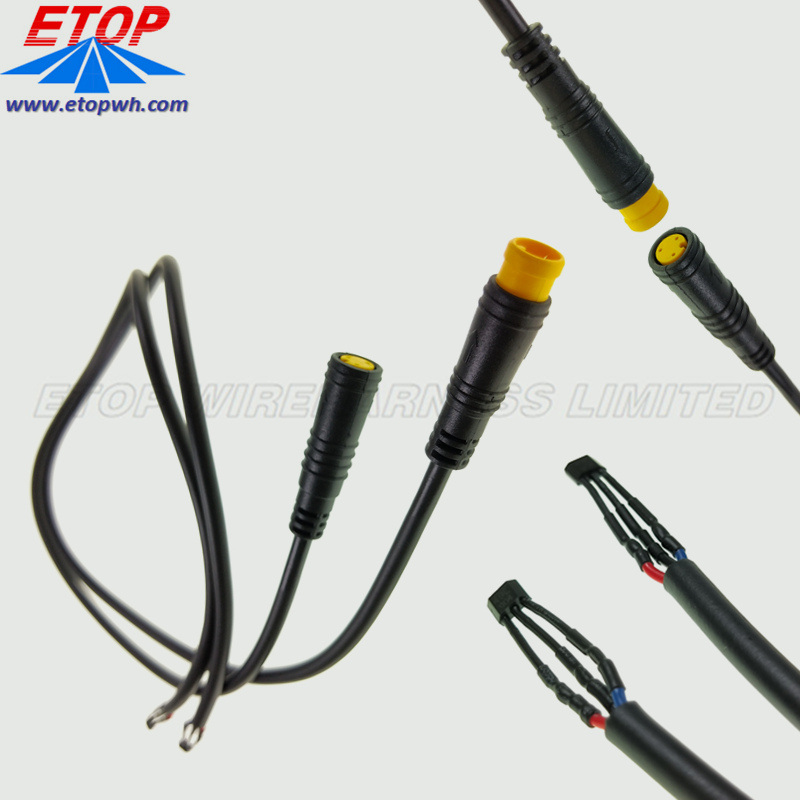
Connectors are an important difference between a complete E-bike Wiring Harness and a basic wire. E-bike systems often require different components to be connected and disconnected during assembly, maintenance, or component replacement.
An E-bike Wiring Harness may use connectors designed for power transmission, signal transmission, sensors, displays, motors, or other components. The connector type needs to match the electrical and mechanical requirements of the corresponding component.
Some e-bike applications may also require connectors with protection against moisture, dust, vibration, and mechanical movement. This can be particularly relevant for wiring routed around the frame, motor area, or other exposed locations.
Does an E-bike Wiring Harness Use Different Wire Sizes?
Yes. A wiring harness may contain wires with different specifications depending on the electrical function of each circuit. High-current connections, such as those associated with a battery or motor, may require different wire characteristics from low-current signal connections used by sensors or displays.
Wire gauge, conductor material, insulation, current requirements, operating voltage, cable length, and installation conditions should all be considered when designing an Electric Bike Wiring Harness.
Using an inappropriate wire size can affect electrical performance. Therefore, the wiring harness should be designed according to the requirements of the e-bike's electrical system rather than simply selecting wires based on their appearance.
Is an E-bike Wiring Harness More Organized Than Regular Wires?
One of the primary advantages of an E-bike Wire Harness is organization. Individual wires can become difficult to route when an e-bike contains several electrical components. A harness groups related wires together and provides a predefined routing structure.
This can help reduce cable clutter around the frame and make the assembly process more consistent. Depending on the design, a harness may also include protective sleeves, cable ties, clips, or other mechanical features that help maintain the intended routing path.
An organized wiring system can be particularly useful for e-bike manufacturers producing multiple units with the same electrical configuration because the same harness design can be installed consistently across different bicycles.
Can a Regular Wire Replace an E-bikes Wiring Harness?
In some situations, individual wires can be used to repair or replace a specific section of an e-bike wiring system. However, replacing a complete harness with separate regular wires is not always practical.
A complete Electric Bicycle Wiring Harness is designed around the connections, wire specifications, connector types, and routing requirements of a particular electrical system. Using individual wires may require additional connectors, terminals, insulation, protective coverings, and manual assembly.
For repairs, the replacement wire should match the electrical and physical requirements of the original circuit. For complete system replacement, an appropriately configured wiring harness can provide a more organized solution than assembling every connection individually.
How Does a Wiring Harness Affect E-bike Maintenance?
A well-designed E-bikes Wiring Harness can simplify maintenance because the electrical connections are organized into identifiable sections. If an e-bike develops an electrical problem, technicians can inspect connectors, cables, and individual circuits according to the wiring layout.
By comparison, a system assembled from many independent wires can become harder to trace, particularly when cables have similar appearances or are routed through different parts of the frame.
Maintenance can also be easier when the harness has clear connector configurations and accessible connection points. A corresponding wiring diagram can further help technicians identify individual circuits and troubleshoot electrical issues.
What Should You Consider When Choosing an E-bike Wiring Harness?
When selecting an E-bike Wiring Harness, it is important to consider more than the overall cable length. The harness should be compatible with the motor, controller, battery, display, sensors, and other electrical components used by the e-bike.
Important factors can include wire gauge, voltage and current requirements, connector type, connector configuration, cable length, insulation material, environmental conditions, routing requirements, and the number of electrical circuits.
For applications exposed to moisture, vibration, or frequent movement, the mechanical and environmental characteristics of the harness are also important. The connector design and cable protection should correspond to the conditions in which the electric bicycle will operate.
E-bikes Wiring Harness vs. Regular Wire: Which One Is Better?
Neither solution is universally better because they serve different purposes. A regular wire can be suitable for simple electrical connections or individual repairs, while an E-bikes Wiring Harness is more appropriate when multiple electrical components need to be connected within an organized system.
For an electric bicycle with a battery, motor, controller, display, sensors, and other electrical components, a complete wiring harness can simplify assembly and provide a more structured connection system. For a small repair or a single electrical connection, an individual wire may be sufficient.
The right choice ultimately depends on the electrical architecture, current requirements, connector configuration, installation environment, and maintenance requirements of the e-bike.
Conclusion
The difference between an E-bikes Wiring Harness and a regular wire mainly comes down to integration and system design. A regular wire is generally an individual conductor used to transfer electrical power or signals, while an E-bike Wiring Harness combines multiple wires, connectors, and protective or routing components into an organized electrical assembly.
For electric bicycles, a properly designed Electric Bike Wiring Harness can connect the battery, controller, motor, display, sensors, and other electrical components in a structured way. It can also simplify installation, reduce cable clutter, and make the overall wiring system easier to manage.
Understanding the difference between an E-bike Wiring Harness, E-bike Wire Harness, Electric Bicycle Wiring Harness, and individual wires is important when designing, assembling, repairing, or upgrading an electric bicycle. The appropriate wiring solution should be selected according to the specific electrical, mechanical, and environmental requirements of the e-bike.