

A standard cable assembly is mass-produced with fixed specifications, designed for general use, while a custom cable assembly is engineered specifically to meet unique requirements such as size, performance, environment, and connectivity. The key difference lies in flexibility: custom solutions are tailored by custom cable manufacturers to match exact project needs, whereas standard assemblies follow pre-defined configurations with limited adaptability.
In today’s highly specialized industries such as automotive, medical, aerospace, and industrial automation, connectivity requirements are becoming more complex. This is where the distinction between standard and custom cable assembly becomes extremely important. While both serve the purpose of transmitting power or signals, their design philosophy and application scope are very different.
Standard cable assemblies are typically produced in bulk by cable assembly manufacturers using fixed designs. These products are cost-effective and readily available, making them suitable for general applications where performance requirements are not highly specialized. However, their limitation lies in adaptability. Users must adjust their systems to fit the cable specifications rather than the other way around.
In contrast, a custom cable assembly is built from the ground up based on specific technical requirements. This includes considerations such as voltage, signal integrity, temperature resistance, mechanical stress, and environmental conditions. Custom cable manufacturers work closely with clients to design assemblies that perfectly fit the application, ensuring optimal performance and reliability.
One of the biggest advantages of customization is precision engineering. For example, industries that rely on high-speed data transmission often require shielding and impedance control that standard solutions cannot provide. In such cases, custom wire harness solutions are essential to maintain signal quality and reduce interference. This is especially critical in aerospace systems and advanced medical devices where even minor signal loss can lead to performance issues.
Another important factor is space and design constraints. Many modern electronic systems are becoming smaller and more compact. A standard cable may not fit the available space or routing path, which is why engineers rely on custom wire harness manufacturers to design compact, efficient layouts that optimize internal space while maintaining durability.
Material selection is also a key difference. Standard assemblies use general-purpose materials suitable for average environments. However, custom cable assembly manufacturers can select specialized materials such as high-temperature insulation, chemical-resistant coatings, or enhanced shielding layers. This ensures reliability in harsh environments such as factories, outdoor installations, or automotive engine compartments.
In some applications, flexibility and signal integrity over long distances are critical. This is where custom coax cables become essential. Unlike standard coaxial cables, custom versions are engineered with specific impedance values, shielding effectiveness, and connector types to support high-frequency or high-speed data transmission with minimal loss.
Cost is another major consideration when comparing standard and custom solutions. While standard cables are generally cheaper upfront, they may not always deliver long-term value if they fail to meet system requirements. On the other hand, working with experienced custom cable manufacturers may involve higher initial design costs, but it often results in improved durability, reduced maintenance, and better system efficiency over time.
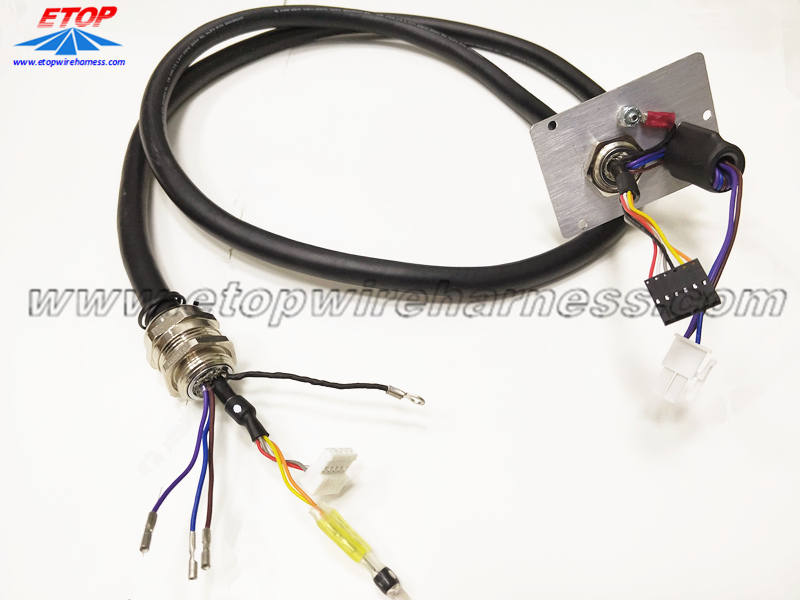
Additionally, collaboration plays a key role in custom solutions. Leading cable assembly manufacturers often provide engineering support, prototyping, and testing services to ensure the final product meets all performance criteria. This collaborative process reduces risk and improves product reliability before full-scale production begins.
In conclusion, the difference between standard and custom cable assembly lies in flexibility, performance, and application specificity. Standard solutions are ideal for general-purpose use, while custom designs offer tailored performance for demanding environments. As industries continue to evolve, the demand for custom wire harness, custom coax cables, and advanced engineered solutions will continue to grow, making custom cable assembly manufacturers an essential part of modern engineering supply chains.